
Valorant ranks run through nine tiers, from Iron at the bottom to Radiant at the very top. Each tier below the highest is split into three divisions, giving players a clear ladder to climb in competitive play.
| Detail | Info |
|---|---|
| Game | Valorant |
| Developer | Riot Games |
| Rank tiers | Nine (Iron to Radiant) |
| Esport status | Riot's second global esport |
| Cost to play | Free to play |
Valorant's competitive ladder is one of the most watched in modern FPS. Riot Games has grown it into a serious esport, described as the studio's second global esport alongside League of Legends.
This guide breaks the ranks down cleanly. It also flags exactly what is confirmed and what is not.
The full Valorant rank order
The ladder is easy to memorize once you see it laid out. Every tier except the top one has three sub-divisions.

- Iron - the entry tier for new competitive players.
- Bronze - early climbers finding their footing.
- Silver - solid fundamentals, still learning.
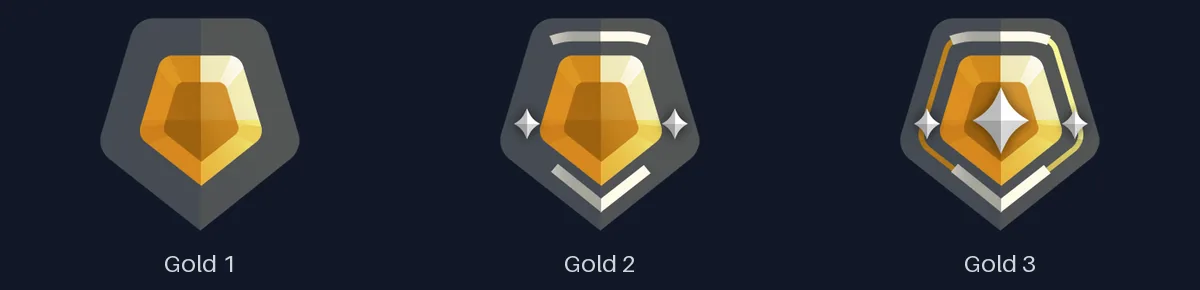
- Gold - the classic "average" band many players sit in.
- Platinum - above-average mechanics and game sense.
- Diamond - strong players with sharp aim and comms.
- Ascendant - a high-skill tier near the top.
- Immortal - elite competitive level.
- Radiant - the single highest rank, reserved for top players.
Note the shape here. Eight tiers use three divisions each, and Radiant stands alone as the peak with no sub-divisions.
How the ranking system works
Valorant uses a competitive rating that climbs as you win and falls as you lose. Performance and match results both feed into where you land.
Ranked Rating (RR)
You earn or lose points inside your current division. Filling the bar promotes you, and draining it demotes you. The exact RR thresholds and gain/loss formulas are not officially confirmed in the sources here.
Radiant is different
Radiant is not a division you simply grind into. It is a capped elite tier reserved for the top players on a region's leaderboard. That scarcity is what makes it prestigious.
Why ranks matter in the Valorant scene
Ranks are more than a personal badge. They connect directly to the game's competitive identity and pro pipeline.
Riot has built Valorant into its second global esport, per reporting on how the studio scaled the title. A strong ranked ladder feeds that ecosystem by surfacing talent.
The pro side keeps growing around it. AMD introduced a limited-edition Valorant VCTCN 2026 gaming hardware collection, showing how brands attach themselves to the scene.
Roles matter at the top too. 100T Timotino praised having Cryo and Asuna as true duelists, a reminder that agent roles shape high-level play.
Valorant ranks vs other tier systems
Ranked ladders share DNA across shooters. Here is how Valorant's structure compares in broad shape.
| Feature | Valorant | Typical FPS ladder |
|---|---|---|
| Number of tiers | Nine | Varies by game |
| Divisions per tier | Three (except top) | Often three |
| Top tier | Radiant (capped elite) | Often a capped top rank |
| Free to play | Yes | Varies |
Radiant is a leaderboard slot, not a grind target, so treat it like a competition rather than a checklist.
FAQ
What is the highest rank in Valorant?
Radiant is the highest rank. It sits above Immortal and is reserved for the top players in a region, making it the most prestigious tier on the ladder.
How many ranks are in Valorant?
There are nine tiers, running from Iron to Radiant. Every tier except Radiant is divided into three sub-divisions.
Is Valorant free to play?
Yes. Valorant is a free-to-play title from Riot Games, and the competitive ranked mode is available at no cost.
Is Valorant a real esport?
Yes. Reporting describes it as Riot's second global esport, with events like the VCTCN 2026 season drawing hardware sponsors such as AMD.
Want to climb faster or start on a higher-rated account? Browse verified Valorant accounts on METAMMO, compare options across other titles like Apex Legends and Fortnite, or explore the full accounts catalog to find the right fit.
![[EU] Champions 2025 | 64k VP | 77 Skins | Immortal 2](https://cdn.sanity.io/images/scwu1y1a/production/3ee1dd46341aabb62694d2b07366730818bfb626-1200x630.png)